


What Are 24 VDC Linear Actuators?
A 24 VDC linear actuator is an electric actuator that uses 24-volt direct current power to produce mechanical linear motion. Inside the actuator, a DC motor generates high-speed rotational motion, a gearbox increases the torque, and a lead screw converts that rotation into the linear extension and retraction of the output shaft.
This allows the actuator to push, pull, lift, or position a load along a straight path. Because of their straightforward mechanical design and reliable operation, 24V DC actuators integrate cleanly into industrial control systems, automation controllers, and PLC-based environments where 24V is the standard operating voltage.

24V vs 12V Linear Actuators
Both 12V and 24V electric linear actuators use the same internal mechanism. The voltage difference affects current draw, wiring requirements, and efficiency across longer cable runs not the fundamental operating principle.
The core relationship is straightforward: for the same power output, doubling the voltage halves the current draw. A 24V actuator producing a given force draws approximately half the current of a 12V actuator producing the same force at the same speed. That difference has practical consequences in how you size the wiring, power supply, and control system.
12V vs 24V Linear Actuators - Key Differences
Both voltage options use the same internal mechanism. The difference is electrical: doubling the voltage halves the current draw, which affects wiring cost, voltage drop over distance, and power supply sizing.
| Factor | 12V | 24V |
|---|---|---|
| Current draw | Higher - doubles for the same power output | Lower - half the current of an equivalent 12V unit |
| Wire gauge | Heavier gauge required to handle higher current | Lighter gauge sufficient, reducing material cost |
| Voltage drop over distance | More pronounced on long cable runs | Half the voltage drop of 12V on the same wire gauge |
| Typical applications | Automotive, marine, home automation, lighter loads | Industrial machinery, vehicles, solar, heavy-duty use |
| Power supply availability | Widely available, compatible with standard batteries | Standard in industrial and commercial control systems |
| Multi-actuator systems | Current draw multiplies quickly across multiple units | Lower per-unit current simplifies power supply sizing |
12V is the practical choice for automotive, marine, and battery-based systems. 24V is the better fit for industrial power systems, long cable runs, or installations with multiple actuators running simultaneously.
Applications of 24 VDC Linear Actuators

Automation Systems
In industrial automation, 24V actuators are used to open and close doors, move panels, adjust equipment positions, and control mechanical components. Their compatibility with programmable controllers and 24V PLC outputs makes them a natural fit for automated production systems.
Machinery and Equipment
Many types of machinery use 24V actuators to adjust machine parts, control gates or valves, and automate mechanical processes. The lower current draw compared to 12V units reduces heat generation in control cabinets and simplifies fusing and wiring in high-cycle applications.
Vehicles and Mobile Equipment
In trucks, agricultural equipment, and specialty vehicles, 24V actuators control compartments, seating adjustments, lifting mechanisms, and access panels. Many commercial vehicles and agricultural machines run 24V electrical systems, making 24V actuators a direct fit with no voltage conversion required.
Robotics and Motion Control
Robotic systems use 24V actuators for precise mechanical movement. Feedback options including Hall effect sensors support position control and synchronization in multi-axis systems.
Solar Tracking
24V actuators are commonly used in solar panel tracking systems, where panels tilt to follow the sun throughout the day. The efficiency advantages of 24V wiring are particularly relevant in outdoor solar installations with long cable runs between the panel and the control system.
Selecting the correct 24V actuator requires matching the mechanical, electrical, and environmental requirements of your application to the actuator's rated specifications
How to Choose the Right 24 VDC Linear Actuator

Collapsible row
Collapsible row
Collapsible row
Collapsible row
24VDC Linear Actuators BLOG RESOURCES
 How to Pick the Right Power Supply for Your Linear Actuator
 Customer Project: Automated Concert Wings
 Key Considerations for Selecting a Manufacturer for your Motion Control Products
 Living Large in 170 sq ft - A Luxury Tiny Home Meets Home Automation
 How to Replace an Actuator
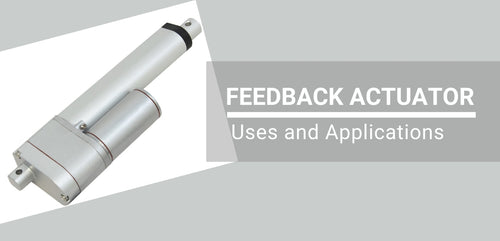 Feedback Actuator Uses and Applications
 Stair Climbing Wheelchair Using PA-17-POT Actuator