





Linear actuators are used throughout modern RVs to create controlled push, pull, lift, and tilt motion. In a camper, trailer, motorhome or van conversion, they can help automate space-saving features such as bed lifts, slide-outs, roof vents, retractable steps, awnings, storage compartments, solar panel tilt systems and hidden accessories. For RV projects, actuator selection should be practical first. The right actuator needs enough force, the correct stroke, compatible voltage, suitable weather protection, safe mounting geometry, and the right control method for the application. If multiple actuators move one load, feedback and synchronization may also be required.
How Linear Actuators Improve RV Automation
RVs have limited space, so many features need to move only when they are needed. Electric linear actuators are useful because they provide compact, repeatable motion from a compatible 12VDC or 24VDC control system.
- Easier access to beds, storage, vents and panels.
- Better use of compact interior space.
- Push-button control for hard-to-reach features.
- Cleaner installation than many hydraulic or pneumatic systems.
- Compatibility with switches, remotes, control systems and feedback-based controls.
Common RV Linear Actuator Applications
| RV Application | Typical Motion Need | Key Selection Factors |
|---|---|---|
| Slide-outs and expanding rooms | Heavy push/pull motion | High force, structure, guides, mounting geometry and OEM compatibility |
| Camper van bed lifts | Vertical lifting or assisted lifting | Force, synchronized motion, guide rails, stroke and safety stops |
| Awnings, vents and windows | Open, close, extend or retract | Weather rating, speed, stroke and controller compatibility |
| Storage, steps and hidden accessories | Lift, deploy or conceal | Compact size, bracket placement, service access and vibration resistance |
Slide-Outs and Expanding Rooms

Slide-outs, pop-up trailers, and expanding camper rooms are one of the most visible uses of actuators in RVs because they expand the living area when the vehicle is parked. These systems can involve heavy loads, guides, seals, and OEM-specific mechanisms, so they should be treated carefully.
A high-force actuator may be suitable for custom heavy-duty motion, but do not choose one by force rating alone. Confirm the slide mechanism, guide system, load path, stroke, mounting points, electrical system, and safety requirements. For OEM slide-out replacement, verify whether the system requires an exact replacement part or a compatible actuator approved for that mechanism.
The PA-13 High Force Industrial Linear Actuator is an example of a high-force actuator with IP66 protection, but application review is important for mobile RV systems that may experience vibration, road movement or impact loading.
Camper Van Bed Lifts

Bed lifts are popular in camper vans because they let the same area serve as a sleeping space at night and open floor or storage space during the day. A van conversion bed lift can use multiple actuators, especially when the bed platform must remain level.
For bed lifts, the linear actuator guide system should carry side loads. The actuators should provide lifting motion, not act as the only guides, bearings, or mechanical stops. Hall effect feedback is commonly used when multiple actuators must move together through the compatible control boxes.
Awnings, Vents, Windows and Solar Panels
Outdoor RV features need special attention because they may be exposed to water, dust, vibration and changing temperatures. For these applications, review IP rating, corrosion resistance, stroke length, speed, mounting bracket strength, wind exposure and service access.
The PA-04 Linear Actuator IP66 may be a fit for certain outdoor or general-purpose RV motion projects after stroke length, force, voltage, feedback and mounting requirements are confirmed.
Storage, Steps, Tables and Hidden Accessories
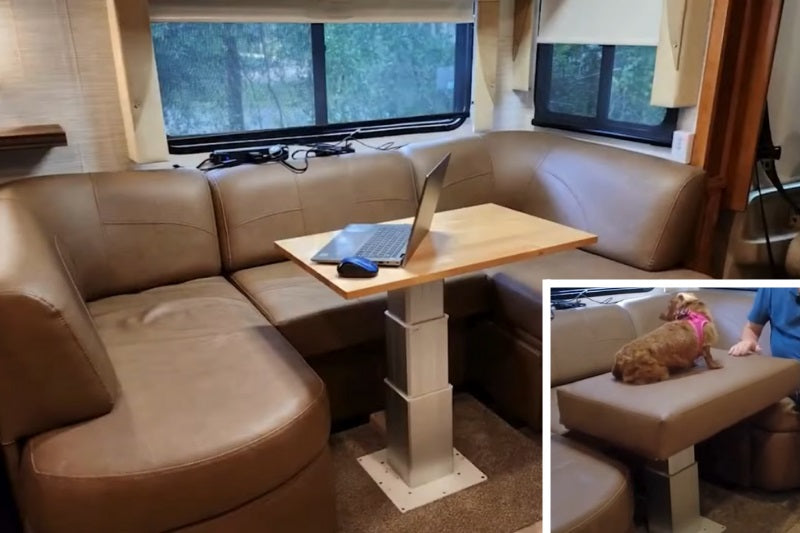
Inside the RV, smaller actuators can automate adjustable tables, hidden TV lifts, retractable outlets, appliance trays and storage compartments. These applications often prioritize compact size, quieter movement and clean wiring.
For compact indoor mechanisms, the PA-01 Mini Linear Actuator may be worth considering after checking stroke, force, speed, voltage and mounting space.
How to Choose the Right Linear Actuator for an RV
| Selection Factor | What to Confirm |
|---|---|
| Load | Weight, load angle, friction, binding risk and safety factor |
| Speed | Time span requirements to complete the travel |
| Stroke | Required travel from fully closed to fully open |
| H2H lengths | The hole-to-hole lengths when fully opened and fully closed |
| Voltage | RV battery/control voltage and actuator operational voltage |
| Current draw | Power supply, fuse, controller, and wire gauge of cables |
| Feedback | Needed for synchronized, presets, or position-controlled motion |
| IP rating | Indoor, outdoor, dusty, wet or exposed installation |
Example Product Paths for RV Projects
For broad RV automation projects, start with the RV, Motorhome and Camper Actuators page. For general actuator browsing, visit the Linear Actuators collection. For force and geometry planning, use the Linear Actuator Calculator.
- PA-13 High Force Industrial Linear Actuator for reviewed heavy-duty applications.
- PA-04 Linear Actuator IP66 for certain outdoor or general-purpose RV applications.
- PA-01 Mini Linear Actuator for compact indoor mechanisms.
- FLTCON-4 for compatible four-actuator Hall effect synchronization.
- RT-11 remote for compatible preset-position controls.
Installation and Design Tips
- Let the RV structure guide the load and let the actuator provide motion.
- Avoid side loading the actuator shaft.
- Use compatible mounting brackets that match the actuator model and expected load.
- Confirm the actuator does not bottom out before the mechanism reaches its stop.
- Leave access to wiring, fasteners, and mounting points.
- Protect wiring from abrasion, moisture and pinch points.
- Use feedback actuators when multiple actuators must stay in synchronized motion.
- Confirm controller compatibility before wiring.
- For OEM systems, verify replacement requirements before changing actuator type.
FAQ About RV Linear Actuators
What are linear actuators used for in RVs?
Linear actuators are used to automate slide-outs, bed lifts, awnings, vents, windows, storage doors, retractable steps, TV lifts, tables, solar panels and hidden accessories.
Can I use a 12V linear actuator in an RV?
Yes, many RV projects use 12VDC actuators, but the actuator voltage, current draw, control box, wiring and fuse protection must all be compatible with the RV electrical system.
What actuator do I need for a camper van bed lift?
A bed lift actuator setup depends on bed weight, lift geometry, stroke length, mounting points, guide rails and control method. Multi-actuator bed lifts often require feedback actuators and a synchronized control box.
Do RV actuators need feedback?
Feedback is not always required. It is useful when the system needs position control, presets, or synchronized movement between multiple actuators.
What IP rating should I use for RV actuators?
Outdoor or exposed RV applications should use an actuator with a suitable IP rating for dust and moisture exposure. Always verify the IP rating on the product page or datasheet before choosing a model.
Can I replace an OEM RV actuator with a Progressive Automations actuator?
Possibly, but replacement depends on force, stroke, voltage, mounting dimensions, duty cycle, controller compatibility, and the original mechanism. OEM slide-outs and leveling systems may require exact replacement parts or technical review.
Need help matching an actuator to your RV project? Visit our RV actuator solutions page or contact Progressive Automations with your application details for customer support.